Motorcycle Insurance in Fremont: How to Get a Quote Fast
Jeffrey CarvalhoCA License #0783367
· 11 min read
Last Updated: November 8, 2026
Quick Summary
To get a motorcycle insurance quote in Fremont, gather your motorcycle's VIN, your driving history, and your current declarations page first, then request quotes using identical coverage limits and deductibles. Preparing these details before you start is what turns a rough estimate into a usable quote.
- Pull your current declarations page to match your existing bodily injury and property damage limits.
- Have the bike's year, make, model, and VIN ready, and note any modifications.
- List tickets, at-fault accidents, and claims from the past several years accurately.
- Request every quote with the same limits, deductibles, and optional coverages so they can be compared.
- Confirm any agent is licensed to write motorcycle policies in California before you buy.
Table of Contents
- How to Get a Motorcycle Insurance Quote in Fremont
- Motorcycle Insurance Coverage Options Explained
- What Information to Gather Before You Request a Quote
- Motorcycle Insurance Cost: What Drives Your Premium
- California Minimum Requirements and When SR-22 Applies
- Getting a Motorcycle Insurance Quote Online or by Phone
- Comparing Quotes Apples-to-Apples and Booking Your Policy
- Frequently Asked Questions
How to Get a Motorcycle Insurance Quote in Fremont
Getting a motorcycle insurance quote in Fremont is a short, predictable process if you prepare the right details before you start. The difference between a rough estimate and a usable quote is almost always preparation.
Here is the practical sequence that works for local riders:
- Pull your current policy declarations page. If you already carry motorcycle coverage, the declarations page lists your bodily injury limits, property damage limits, deductibles, and optional coverages. Having it in hand lets you ask for matching limits instead of guessing.
- Collect your motorcycle details. You will need the year, make, model, and vehicle identification number (VIN). If the bike has aftermarket exhaust, custom paint, upgraded suspension, or other modifications, note them, because carriers rate modified bikes differently.
- Gather rider and household information. Name, date of birth, address, driver's license number, and the years you have held a motorcycle endorsement. If other licensed riders in the household will operate the bike, include them.
- Assemble your driving history. Most carriers look back several years for tickets, at-fault accidents, and claims. List them accurately; a quote built on incomplete history often changes at underwriting.
- Decide your coverage targets before you ask for pricing. Choose a bodily injury limit, a property damage limit, a deductible, and whether you want collision, comprehensive, uninsured motorist, and roadside assistance. Asking for pricing without targets produces quotes you cannot compare.
- Request the quote online or by phone. Online requests work well when your details are complete and you want a fast estimate. A phone call helps when you have a violation, an SR-22 requirement, a custom build, or questions about how a specific coverage applies.
- Ask for the same coverage levels from every source. A quote is only comparable when the limits, deductibles, and optional coverages match.
Choosing an agent. Confirm any agent you work with is licensed to write motorcycle policies in California, and ask whether they handle SR-22 filings if that applies to you.
What to have ready for a phone quote. Keep the declarations page, VIN, license number, and a pen handy.
Watch out: a quote that omits a ticket, a claim, or a household rider is not a lower price.
After you receive quotes, set them side by side using the same limits and deductibles. The lowest number is not automatically the best value; check the claims process, the carrier's service reputation, and whether the policy includes the optional coverages you actually want.
Motorcycle Insurance Coverage Options Explained
A motorcycle policy is built from several coverage types, and each one protects against a different risk. Understanding what each does makes the quote easier to read and easier to compare.
Liability and Bodily Injury Limits
Liability coverage pays for injuries and property damage you cause to others. Bodily injury limits set the most your policy will pay for injuries to other people in an accident you cause. Property damage limits cover repairs or replacement for other people's vehicles and property.
California sets minimum liability requirements, so every rider needs at least that much. Many riders choose higher limits, because medical costs from a serious crash can exceed the minimum quickly. Higher limits usually cost more, so ask your agent to show you a few levels side by side.
Collision, Comprehensive, and Uninsured Motorist Coverage
Collision coverage pays to repair your motorcycle after a crash, regardless of fault, subject to your deductible. Comprehensive coverage handles non-collision losses such as theft, vandalism, fire, or hail damage. Uninsured motorist coverage protects you if a driver with no insurance, or not enough insurance, injures you.
Riders with newer or custom motorcycles often carry collision and comprehensive coverage, since the cost to repair or replace the bike can be high. Older bikes with lower values may not justify those coverages, so compare the premium against the bike's current worth.
The main coverage types and what each one protects against:
| Coverage | What it pays for | Typical use |
|---|---|---|
| Bodily injury liability | Injuries you cause to others | Required in California |
| Property damage liability | Other people's vehicles and property | Required in California |
| Collision | Repairs to your bike after a crash | Regardless of fault, subject to deductible |
| Comprehensive | Theft, vandalism, fire, hail | Non-collision losses |
| Uninsured motorist | Your injuries from an uninsured driver | Protects you from others' lack of coverage |
What Information to Gather Before You Request a Quote
Having your details ready speeds up the process and improves the accuracy of your quote. Most insurers will ask for the same core information.
- Motorcycle details: year, make, model, and vehicle identification number (VIN)
- Modifications: aftermarket parts, custom paint, or upgraded equipment
- Rider information: name, date of birth, address, and license number
- Driving history: tickets, accidents, and any claims from the past several years
- Current coverage: your existing policy, if you have one, and its limits and deductibles
- Usage: whether you ride for commuting, pleasure, or work
Bring your current policy declarations page if you have one. It lets you match coverage levels exactly when you compare quotes.
Motorcycle Insurance Cost: What Drives Your Premium
Motorcycle insurance costs vary widely, and no single figure applies to every rider. Published averages from several sources differ because they reflect different coverage levels, states, and rider profiles.
Several factors shape your premium:
- The motorcycle: engine size, value, and repair costs
- Your riding record: prior accidents and tickets
- Your coverage choices: higher limits and added coverages raise the price
- Your deductible: a higher deductible typically lowers the premium
- Your location: where you garage and ride can affect rates
Because pricing depends on these details, the only reliable way to know your cost is to request a quote based on your own information.
Average motorcycle insurance premiums by source
California Minimum Requirements and When SR-22 Applies
California requires motorcycle riders to carry liability insurance, and the state sets minimum limits for bodily injury and property damage. Confirm the current California minimum limits before you buy. These figures are the floor, not a recommendation. Confirm the current limits with the California Department of Insurance or the California Department of Motor Vehicles before you buy, because requirements can change.
Why riders often buy more than the minimum. A serious motorcycle crash can produce medical bills well above $15,000 per person. If you cause an accident and the injuries exceed your limits, you can be personally responsible for the difference. Many riders choose bodily injury limits of $100,000 per person and $300,000 per accident, or higher, and pair that with uninsured motorist coverage at the same level. Higher limits raise the premium, so ask your agent to quote two or three limit combinations side by side.
Uninsured and underinsured motorist coverage. Uninsured motorist coverage pays for your injuries when the at-fault driver has no insurance; underinsured motorist coverage applies when the at-fault driver's limits are too low to cover your losses. Neither is a substitute for liability coverage, but both are worth pricing.
When an SR-22 applies. An SR-22 is a certificate of financial responsibility that an insurer files with the California DMV to prove you carry the required coverage. The state may require one after certain violations, including a DUI, driving without insurance, or an at-fault accident while uninsured (Section 10: Financial Responsibility, Insurance Requirements, and Collisions). The filing must remain in place for a set period required by the state, and the exact term depends on the violation.
How the SR-22 process works in practice. Your insurer files the certificate electronically with the DMV, and the DMV links it to your driving record. If you cancel or lapse the policy during the required period, the insurer notifies the DMV, and your license or registration may be suspended. That is why riders with an SR-22 requirement should confirm the filing fee, the filing timeline, and the carrier's cancellation rules before the policy starts.
Proof of insurance. California requires riders to carry proof of insurance, and law enforcement can ask for it during a stop. Keep a current copy of your declarations page or an electronic proof of coverage on your phone.
Watch out: buying only the state minimum to lower the premium can leave you exposed to a personal injury judgment if you cause a serious crash, compare the premium savings against the gap in protection before you decide.
Getting a Motorcycle Insurance Quote Online or by Phone
You can request a quote online at any time, or call an agent if you prefer to talk through your options. Online quotes work well if you know your details and want a fast estimate. A phone conversation helps when you have questions about coverage, a past violation, or an SR-22 filing.
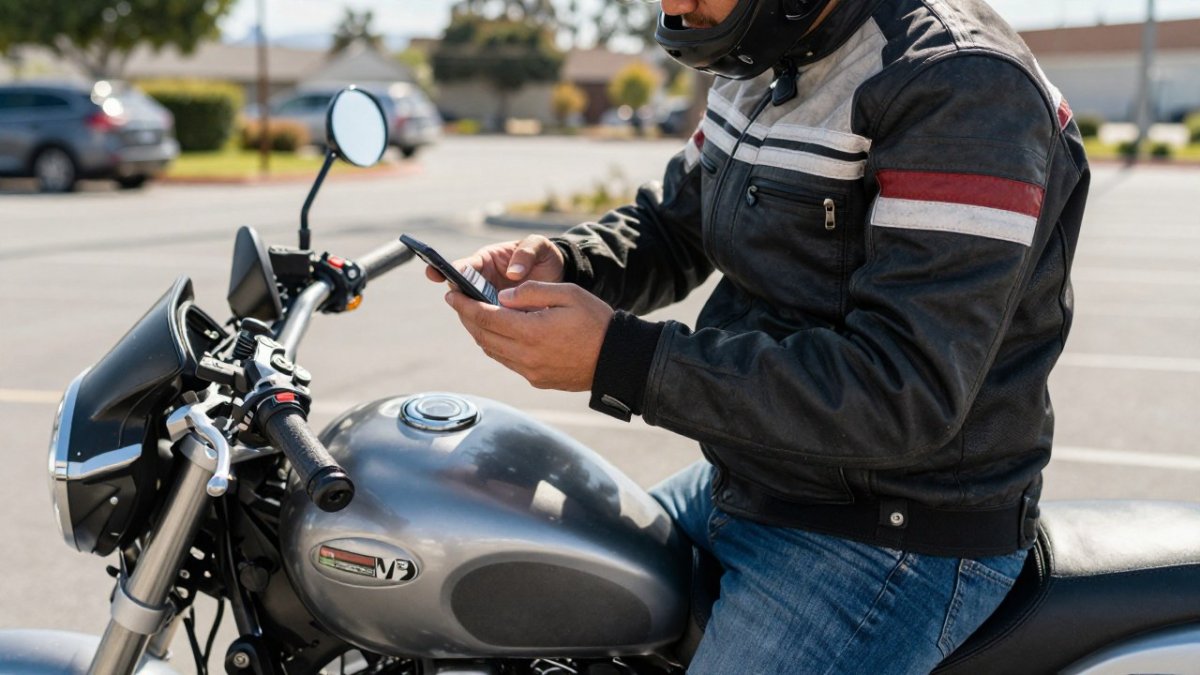
Request a free quote through our website, or call to speak with an agent about your options.
Comparing Quotes Apples-to-Apples and Booking Your Policy
The most common mistake riders make is comparing quotes that cover different things. Before you compare, make sure each quote uses the same bodily injury limits, property damage limits, deductibles, and optional coverages. Otherwise a lower price may simply reflect less protection.
Once you have matching quotes, check the insurer's claims support and service reputation alongside the price. A low premium matters less if the claims process is hard to use after a crash. When you are ready to buy, confirm the policy start date, verify that your declarations page matches what you requested, and keep a copy of your proof of insurance.
Ready to see what you would pay? Request a free motorcycle insurance quote from Farmers Insurance.
Frequently Asked Questions
Who usually has the cheapest motorcycle insurance?
No single insurer is cheapest for every rider. Rates depend on the motorcycle, your riding history, driving record, age, location and coverage level, so the lowest carrier for one rider may be more expensive for another. The most reliable way to find the lowest price is to request quotes with identical coverage limits and deductibles from several carriers and compare them side by side. Pricing depends on your specific details, so request a quote on Farmers Insurance's website for current figures.
How much does it cost to get motorcycle insurance?
Published averages vary widely by source and year. Your actual cost depends on the bike, your riding history and coverage choices. Farmers Insurance has not published its own rates, so request a quote on its website to see what applies to your situation.
What information do I need to get a motorcycle insurance quote?
Have your motorcycle's year, make, model and VIN ready, along with your driver's license number, driving history, and any prior insurance details including lapses or claims. Note how many miles you ride, where the bike is stored, and whether you use it for commuting or recreation. Having these details ready lets you receive accurate quotes faster and compare them on equal terms.
Can I get a free motorcycle insurance quote online?
Yes. You can request a free quote online from Farmers Insurance. Quotes are estimates until you review the coverage details and confirm your application, so check the limits, deductibles and exclusions before purchasing.